Share
The most consequential, insightful news about the growing impacts of plastic pollution.
 ‌ ‌ ‌ ‌ ‌ ‌ ‌ ‌ ‌ ‌ ‌ ‌ ‌ ‌ ‌ ‌ ‌ ‌ ‌ ‌ ‌ ‌ ‌ ‌ ‌ ‌ ‌ ‌ ‌ ‌ ‌ ‌ ‌ ‌ ‌ ‌ ‌ ‌ ‌ ‌ ‌ ‌ ‌ ‌ ‌ ‌ ‌ ‌ ‌ ‌ ‌ ‌ ‌ ‌ ‌ ‌ ‌ ‌ ‌ ‌ ‌ ‌ ‌ ‌ ‌ ‌ ‌ ‌ ‌ ‌ ‌ ‌ ‌ ‌ ‌ ‌ ‌ ‌ ‌ ‌ ‌ ‌ ‌ ‌ ‌ ‌ ‌ ‌ ‌ ‌ ‌ ‌ ‌ ‌ ‌ ‌ ‌ ‌ ‌ ‌ ‌ ‌ ‌ ‌ ‌ ‌ ‌ ‌ ‌ ‌ ‌ ‌ ‌ ‌ ‌ ‌ ‌ ‌ ‌ ‌ ‌ ‌ ‌ ‌ ‌ ‌
EHN.org plastic pollution coverage
Plastic Pollution
Tracking the global growth – and toll – of plastic
This newsletter is sponsored by
Plastic Pollution Coalition
refuse single-use plastic
Opinion: Plastic Free July needs systemic change, not just consumer action
The Conversation
A recent analysis argues that while Plastic Free July aims to reduce plastic use, significant...
Florida expands balloon ban to protect marine life
Associated Press
A new Florida law prohibits the intentional release of balloons, aiming to curb the devastating...
Plastics companies accused of obstructing pollution mitigation efforts
The Guardian
A recent study has revealed that plastics companies have systematically obstructed initiatives to...
Another chemical recycling plant closure offers ‘flashing red light’ to nascent industry
EHN
For the second time this year, a chemical recycling plant built to turn waste into usable products...
Baby bottle companies sued for hiding microplastic dangers
The New Lede
Lawyers claim that baby bottle makers Philips North America and Handi-Craft Co. misled parents...
From our sponsor
Plastic Pollution Coalition
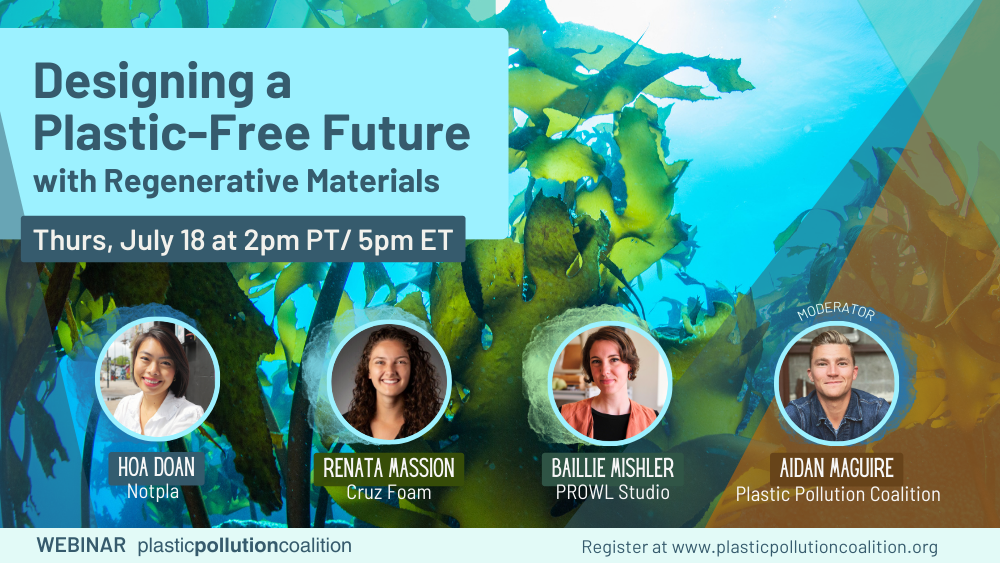
The urgency of our plastic pollution crisis requires a substantial shift in the way products are designed, manufactured, used, and recirculated. From textiles and food containers to sachets and protective shipping packaging, plastic continues to dominate across industries and persist, polluting people and the planet at every stage of its existence. As we create a more circular economy, what exciting bio-based feedstocks and technologies are emerging to help transition away from fossil-based inputs? Can nature-based solutions both be regenerative and scalable?

Designers are key to this transition, acting as the bridge between material innovators on the supply side to real-world applications being brought to life in the market. Join us as we sit down for a conversation with two leading regenerative material suppliers and a holistic design studio that is asking: How do we do "the most good" instead of "less bad" to reorient industrial design to replenish natural systems? We’ll explore the landscape of plastic alternatives, dive into two ocean-based feedstocks, and learn how these materials are being employed for a healthier future. Our panelists include: Hoa Doan, Head of Impact and Sustainability, NotplaRenata Massion, Senior Sustainability Manager, Cruz Foam; and Baillie Mishler, Co-Founder and Design Director, PROWL Studio.

Facebook
 
Twitter
 
Instagram
 
 
Hungry for more news? See our original reporting.

Copyright © Environmental Health Sciences, All rights reserved.

Our mailing address is:
Environmental Health Sciences, PO Box 3244, Bozeman, Montana 59772, United States

Want to change how you receive these emails?


Email Marketing by ActiveCampaign